Do You Really Need a Personal Trainer?
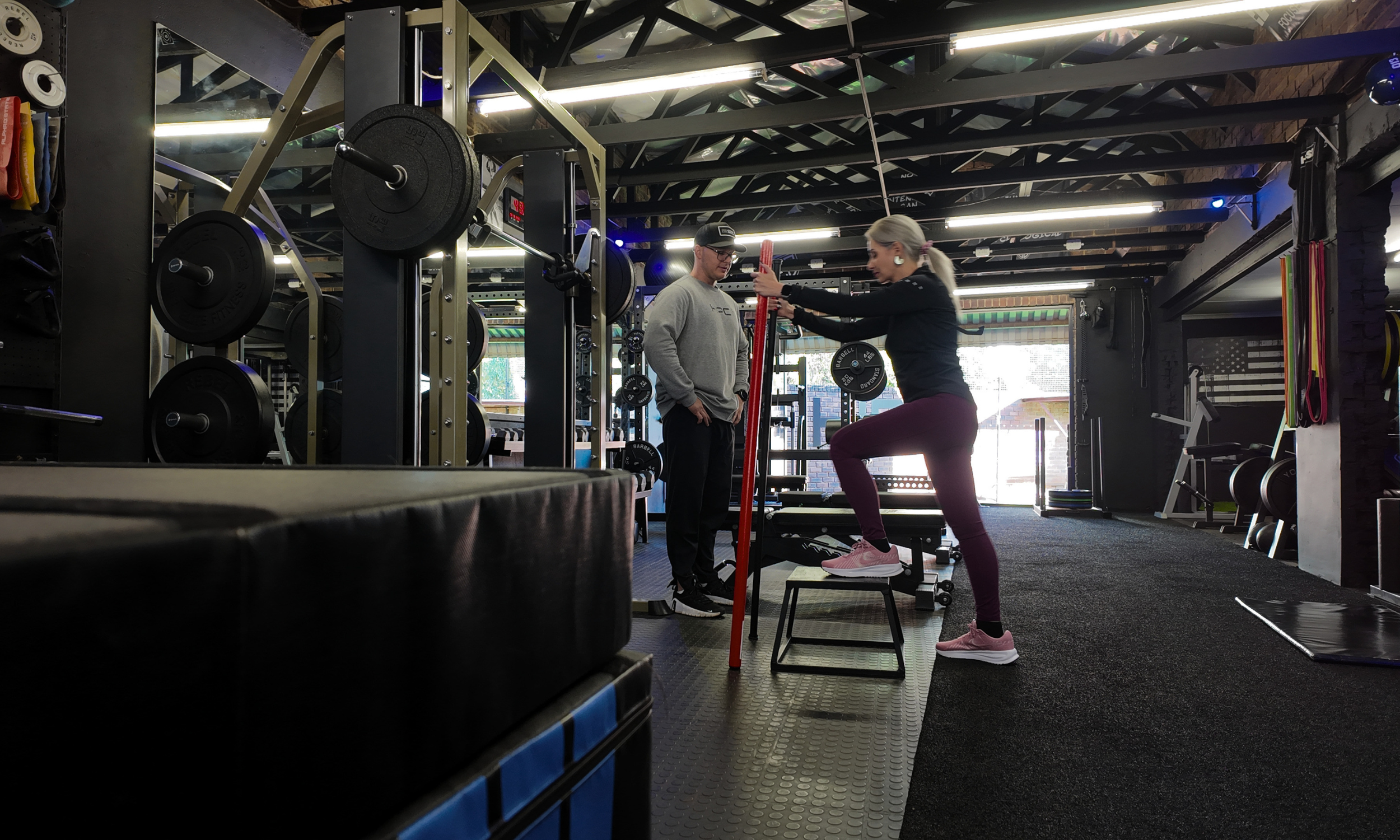
Anton Esterhuizen training a client at The Human Performance Center in Noordheuwel, Krugersdorp.
Here’s What Good Coaching Actually Provides
You don't need a personal trainer because you don't know how to exercise.
You need one when you realise that knowing how to exercise and knowing how to train are not the same thing.
Anyone can find an exercise. Anyone can follow a workout. Anyone can make themselves sweat. The difficult part is knowing whether what you're doing is appropriate for your body, your current capacity and the outcome you're trying to achieve. And that is where good coaching becomes valuable.
The most expensive mistake in the gym isn't necessarily paying for a personal trainer. It is spending months training incorrectly because you didn't know you were doing it.
The Problem With Training Without Understanding
There has never been more fitness information available.
You can find workouts for almost any goal. You can watch professional athletes train. You can copy exercises from social media, follow a programme from a fitness influencer, or simply walk into a gym and use whatever equipment is available. Access to information should make training easier. Instead, it can make it more confusing.
Because knowing that an exercise exists doesn't tell you whether you should be doing it. You may be working around a limitation without realising it. You may be compensating during a movement. You may be progressing an exercise before you've developed the capacity required to perform it well.
And because you're working hard, you may assume you're doing everything correctly. That is the problem.
Effort does not automatically make training effective. You can spend months doing the wrong exercises, progressing the wrong movement or simply applying the wrong training stimulus and still believe that the solution is to work harder.
Sometimes the answer isn't more effort. Sometimes it is better information.
A Trainer Can Give You a Workout. A Coach Should Understand You.
This distinction matters.
A workout provider can tell you what to do.
A coach should understand why you are doing it.
A trainer can give you exercises, count your repetitions and increase the difficulty of a session.
A coach should be able to observe how you move, understand your current capacity, select appropriate exercises, recognise when something isn't working and adapt the programme accordingly.
The difference is not more exercises. It is better decisions.
A workout provider:
Gives you exercises
Counts repetitions
Increases difficulty
Follows a programme
Focuses on the session
Tells you what to do
A coach:
Selects exercises for a reason
Observes movement
Determines when progression is appropriate
Adapts the programme
Considers the bigger picture
Teaches you why
This is why the value of personal training isn't simply having someone beside you while you exercise.
The real value is having someone who can reduce the guesswork.
Good Training Starts With Understanding the Person
One of the biggest mistakes people make in the gym is starting with the programme rather than the person.
They find a workout they like and then attempt to make their body fit the workout. The better approach is to understand the person first. Your body is not identical to the person next to you.
Your anatomy is different. Your movement history is different. Your mobility, stability, coordination, strength, recovery capacity, and training experience may all be different. Your life outside the gym is different too. So why should your training be identical?
An exercise that is appropriate for one person may not be appropriate for another. Even when two people perform the same exercise, the way they move, compensate, load the movement, and respond to it may be completely different. This is why individualisation matters.
The exercise isn't the intervention.
An exercise is a tool.
Its value depends on who is using it, how it is being performed, why it is being used, and whether the person is ready for it.
So rather than asking:
Is this a good exercise?
A better question is:
Is this the right exercise for this person, right now, for this purpose?
That is the difference between collecting exercises and understanding training.
Why Assessment Matters
Good training should not begin with a list of exercises. It should begin with understanding what you are working with.
Assessment gives a coach an opportunity to observe movement, identify areas that may require attention, and establish a more informed starting point for training. That may involve looking at movement patterns, joint positioning, stability, mobility, coordination, breathing mechanics, rib cage mechanics, or the way the body manages movement through the gait cycle.
The point isn't to make training unnecessarily complicated. The point is to understand enough about the individual to make better decisions. If someone is compensating during a movement, simply adding more repetitions may reinforce that compensation.
If a person does not yet have the capacity to perform a particular exercise effectively, adding more load may increase the demand without addressing the underlying limitation.
If progression is the objective, the coach first needs to understand whether the foundation is ready to support it.
The exercise is not the starting point. Understanding is.
Why Working Hard Isn't Always Enough
There is a common assumption that if someone isn't progressing, they simply aren't working hard enough. Sometimes that is true. Often, it isn't.
You can train consistently, sweat through every session, and push yourself hard without making meaningful progress if the training stimulus is poorly selected, poorly executed, or poorly progressed.
You can also become very good at repeating the same movement pattern without ever addressing the reason you are struggling with it. This is why someone can spend months or even years in a gym without achieving the outcome they expected.
The problem isn't necessarily effort.
It may be direction.
More training is not automatically better training.
A good coach helps you distinguish between the two.
Four Things That Commonly Hold People Back in the Gym
People often reach a point where they realise that working harder isn't solving the problem.
The reasons vary, but several patterns appear repeatedly.
1. Lack of Accountability
Consistency matters.
Without some form of accountability, it is easy to skip sessions, lose structure or allow short-term circumstances to continually override long-term goals. A good coach can provide that accountability.
But accountability should be more than someone asking whether you completed your workout. The more important question is:
Did you do the right work?
There is little value in consistently completing a programme that isn't appropriate for you. Good coaching combines accountability with expertise, so that your effort is directed towards something productive.
2. Too Much Information, Not Enough Understanding
We have more access to fitness information than ever before. One person says you should squat every day. Another says squats are bad for your knees. One programme tells you to train to failure. Another tells you to avoid it. One person says you need more cardio. Another says you need to lift heavier.
The problem isn't necessarily that all of this information is wrong. The problem is that general information isn't automatically individualised information. A coach's value is partly in helping you determine what applies to your circumstances.
You don't need another exercise saved to your phone.
You need to understand why you are doing the exercise in the first place.
3. Ineffective Training Methods
An exercise can look impressive and still be the wrong exercise for you.
You may not have the mobility, stability, coordination or control required to perform it effectively. You may be compensating without realising it. The exercise may simply have very little relevance to your actual objective. Or the way it is being performed may be creating a very different stimulus from the one you intended.
This is where exercise selection matters. Good coaching isn't about making every session harder. It is about making the training appropriate.
The objective is not to collect difficult exercises. The objective is to create the right stimulus, at the right time, for the right person.
4. Progression Without Preparation
Progress is necessary. But progression should be earned.
Adding weight, repetitions, speed, complexity, or training volume can be useful when the body is ready for increased demand. If the foundation isn't there, however, progression can simply increase the demand placed on an existing limitation. This is why a good coach needs to understand not only where you want to go, but where you are starting from.
Sometimes the most productive thing you can do is not progress the exercise.
It is to improve the movement that makes progression possible.
Simple, Sensible and Sustainable
There is another important part of good coaching that is often overlooked.
The programme has to work in real life.
A theoretically perfect training programme is not particularly useful if it cannot be followed consistently. Long-term results are usually built through a series of sensible decisions repeated over time.
That may mean increasing daily movement, improving exercise consistency, making better nutritional choices, improving sleep, managing training volume or simply creating a structure that you can maintain.
The goal isn't to change everything at once. The goal is to identify what matters most, address it properly, and build from there.
At HPC, we believe meaningful change should be: Simple. Sensible. Sustainable.
That doesn't mean easy. It means intentional.
Good Coaching Should Educate You
Another quality separates coaching from simply being put through a workout.
Education.
A good trainer should not leave you completely dependent on them for every decision. You should gradually understand more about your own body, your training and the choices that influence your performance.
You should know why you are doing a particular exercise.
You should understand what you are working towards.
You should learn how training fits into the wider picture of your health and performance.
The goal of good coaching isn't to make you dependent on your trainer forever. It is to help you develop enough understanding that you become better at making decisions about your own body and training. The role of a coach is not simply to tell you what to do.
It is to help you understand why.
That knowledge becomes valuable far beyond the training session.
Do You Really Need a Personal Trainer?
Not necessarily.
Someone with sufficient knowledge and experience may be able to train effectively without one. But a personal trainer becomes particularly valuable when you need help understanding your movement, selecting appropriate exercises, managing progression, or identifying why your current approach isn't producing the desired result.
You may not need a coach forever. You may need one while you develop the knowledge and experience to coach yourself.
That is a very different proposition from simply paying someone to make you exercise. A good personal trainer can save you from spending months doing the wrong thing simply because you didn't know there was a better option. They can help you understand what your body needs before asking it to do more. They can provide structure when you lack it, education where information is confusing, and progression when you are ready for it.
Most importantly, they can help turn exercise from something you simply do into something you actually understand.
Why HPC Starts With Assessment
At The Human Performance Centre, we don't believe effective training starts with handing someone a programme.
It starts with understanding the person. Your training should reflect your body, your movement, your current capacity, your objectives and the demands placed on you outside the gym. That is why assessment matters.
It gives us a better understanding of what you are working with before we decide what you should be doing. From there, training can become more deliberate.
Exercises have a purpose.
Progression has a reason.
And your programme can evolve as your body and capacity change. The goal isn't to make you work harder for the sake of working harder. It is to help you move better, train intelligently and make meaningful progress that you can sustain.
Because anyone can give you an exercise.
A coach should understand why you need it.
If you're unsure whether your current training is actually appropriate for you, doing more isn't necessarily the answer.
Understanding where you are now is.
At HPC, that process begins with assessment.
Frequently Asked Questions About Personal Training and guidance
-
Progress is about more than losing weight or lifting more. Your training should be moving you towards the outcome you want while improving your ability to perform, recover and adapt to the demands being placed on your body. If you are consistently training but aren't progressing, repeatedly experiencing the same limitations, compensating during movements or simply aren't sure why you're doing the exercises you're doing, it may be time to reassess your approach.
-
Don't automatically add more training. First, determine what is actually limiting your progress. The issue could be exercise selection, training volume, progression, movement quality, nutrition, recovery, consistency or simply that the current approach isn't aligned with your objective. A proper assessment can help identify where the problem lies before you spend more time doing more of the same.
-
An exercise isn't inherently good or bad. Its suitability depends on the person performing it, their current capacity, how they move, what they are trying to achieve and the demands of the exercise itself. An experienced coach should be able to explain why an exercise has been selected, what it is intended to achieve and whether you are currently capable of performing it effectively.
-
It depends on what the discomfort represents. Training effort, muscular fatigue and unfamiliarity are not necessarily the same as pain or a symptom that persists or worsens. Rather than automatically pushing through or abandoning an exercise, the better approach is to understand what is happening and whether the movement, technique, load or exercise selection needs to change. Persistent or concerning symptoms should be appropriately assessed by a qualified healthcare professional.
-
A meaningful assessment should do more than establish how much weight you can lift. It should help the coach understand your goals, training history, current physical capacity and how you move. Depending on the individual, this may include observing movement patterns, mobility, stability, coordination, breathing mechanics and other factors relevant to training. The purpose is not to produce an impressive report. It is to give the coach enough useful information to make better training decisions.
-
A programme shouldn't change simply because you've been doing it for a certain number of weeks. Training should change when there is a reason to change it. That may be because you've adapted to the current stimulus, reached a new level of capacity, stopped progressing, developed a new objective or experienced a change in your circumstances. Good programming is driven by the individual's response to training, not by arbitrary timelines or the need to constantly introduce something new.
-
Look for a coach who wants to understand you before prescribing a programme. They should be able to explain why an exercise has been selected, observe how you move, adapt training to your current capacity and make progression decisions based on your response rather than simply increasing difficulty. Good coaching should also educate you, not leave you dependent on someone else to make every training decision for you.
-
Be cautious if every client appears to receive essentially the same programme, exercises are selected because they are difficult or fashionable rather than purposeful, sessions are judged primarily by how exhausted you feel, or your coach cannot explain why you are doing a particular exercise. A lack of meaningful assessment, progression without preparation, ignoring poor movement and failing to adapt training when circumstances change are also warning signs. Good coaching should involve observation, reasoning, communication and continual adjustment—not simply putting you through a workout.