Why Training Is About More Than Fitness
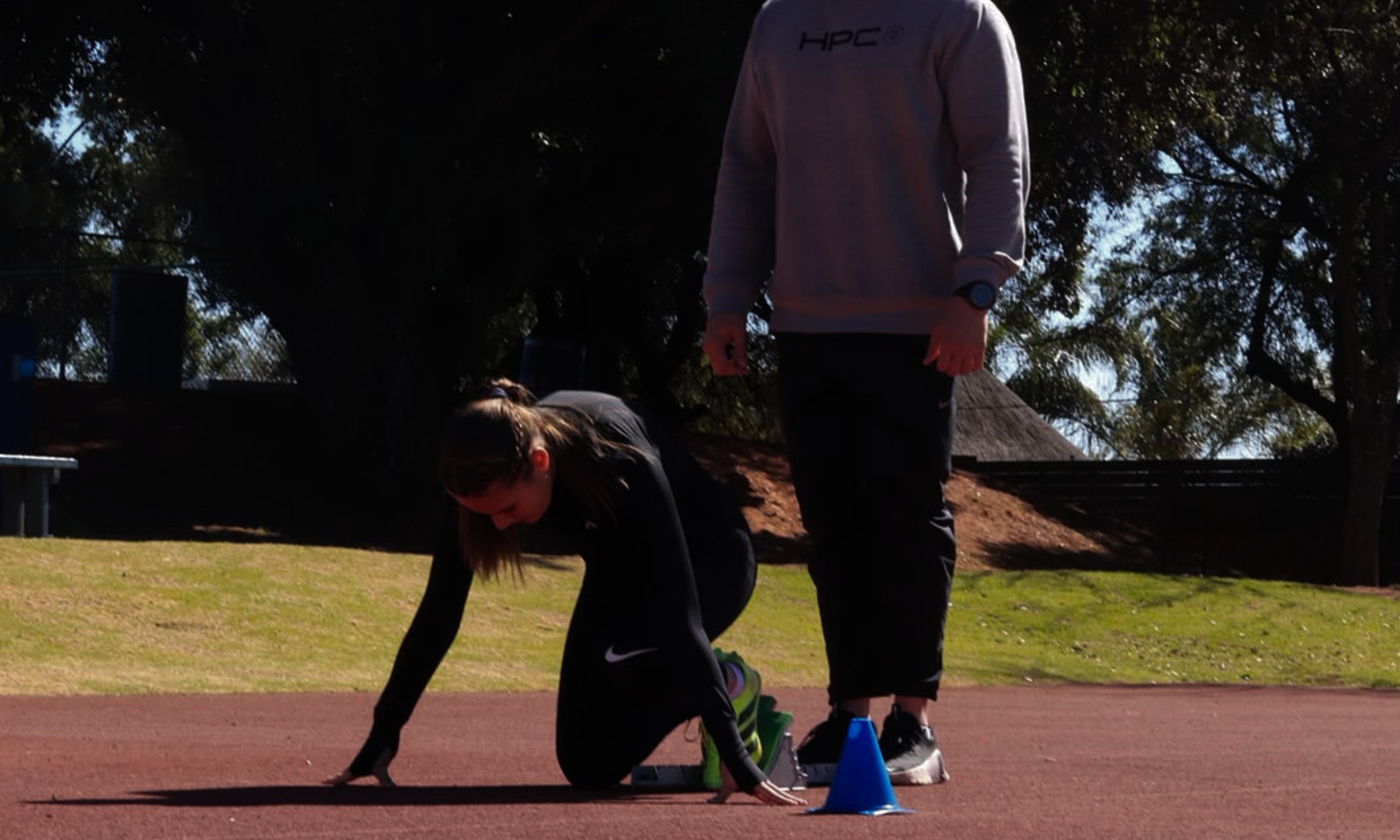
Anton Esterhuizen coaching a school athlete for speed development in Noordheuwel, Krugersdorp.
A holistic approach to health, performance and longevity.
Long before you experience pain, lose strength or feel your energy decline, your body has already begun adapting to how you move—or how little you do.
Every day, your muscles, joints, nervous system and metabolism are responding to the demands you place on them. They are constantly learning, adjusting and preparing for whatever you repeatedly ask of them.
The question isn't whether your body is adapting.
It's whether it's adapting in your favour.
At The Human Performance Centre, we believe training is about far more than exercise. It is the deliberate process of improving the way your body produces, absorbs and controls movement so that every system can function more efficiently. Whether you are an athlete, a business professional, a parent, or simply someone who wants to age well, strategic training provides benefits that extend far beyond the gym floor.
Building a Body That Lasts
Most people associate training with aesthetics or weight management. While these can certainly be positive outcomes, they should never be the primary objective.
The real purpose of training is to build a body that is capable of meeting the demands of everyday life.
When performed consistently and appropriately, training strengthens muscles, tendons, ligaments and bones while improving cardiovascular fitness, joint stability and movement efficiency. More importantly, it teaches your body how to produce, absorb and distribute force efficiently through the kinetic chain, allowing joints and surrounding tissues to share load as they were designed to. The result is greater resilience, improved coordination between the nervous system and muscles, and an increased capacity to recover from physical demands.
These adaptations become increasingly important as we age. Maintaining muscle mass, joint function and balance is one of the most effective ways to preserve independence, reduce injury risk and continue enjoying an active lifestyle for decades to come.
The body never stops adapting. The question is whether it is adapting to movement that strengthens it, or adapting to inactivity that gradually reduces its capacity.
Why How You Train Matters
Not all training produces the same outcome.
Two people can perform the same exercise, yet place completely different demands on their bodies depending on how they move. One develops efficient movement patterns that improve performance and resilience. The other unknowingly reinforces compensations that increase stress on joints and surrounding tissues.
Your body doesn't recognise exercises. It recognises force.
Every repetition teaches your nervous system something. When movement is efficient, those lessons build strength, coordination and long-term capacity. When movement is compromised, the body becomes increasingly efficient at repeating compensation instead.
This is why assessment matters.
Understanding how your body currently moves allows training to become intentional rather than repetitive. Instead of simply accumulating exercises, you begin developing movement strategies that improve efficiency, reduce unnecessary strain and build long-term physical capacity.
At The Human Performance Centre, we don't believe training should simply make you tired. We believe it should make your body more capable.
The Connection Between Movement and Mental Performance
The benefits of training extend well beyond physical health.
Regular physical activity has consistently been shown to reduce stress, improve mood, enhance sleep quality and support cognitive function. It helps regulate the body's stress response while improving focus, concentration and mental clarity.
Perhaps more importantly, training develops confidence through competence.
Every new movement mastered, every physical challenge overcome and every measurable improvement reinforces the belief that progress is possible. That confidence rarely remains inside the training environment. It carries into the workplace, family life, sport and the everyday challenges that demand resilience.
When your body becomes more capable, your mindset often follows.
The Value of Training Together
Although training is deeply personal, it is rarely a journey that people sustain alone.
One of the greatest advantages of a professional training environment is the culture it creates. Working alongside others who share a commitment to improving themselves builds accountability, encouragement and consistency.
Shared effort creates stronger connections than shared comfort.
The right coaching environment challenges individuals to pursue progress while providing the support needed to navigate setbacks, celebrate achievements and remain committed over the long term.
At The Human Performance Centre, this sense of community forms an important part of our coaching philosophy. Performance is never built in isolation.
Training as an Investment in Your Future
Every training session is an investment in the person you will become.
It is an investment in your ability to climb a mountain without hesitation, play with your children without pain, perform confidently in your profession, continue competing in the sports you love, and maintain your independence as the years progress.
Training is not simply preparation for the next event, race or holiday. It is preparation for life itself.
When more people move well, communities become healthier, healthcare demands are reduced, productivity improves and quality of life increases. Individual decisions to prioritise movement create benefits that extend far beyond the individual.
A Different Perspective on Training
At The Human Performance Centre, we believe everyone should incorporate some form of training into their lives.
But we also believe that training should be strategic.
Exercise challenges the body. Strategic training teaches it.
The goal isn't simply to exercise more. It is to move better, build capacity, improve resilience and prepare your body for the demands of both today and tomorrow.
The body is remarkably adaptable. Given the right stimulus, it becomes stronger, more efficient and more resilient. Given the wrong stimulus—or no stimulus at all—it adapts just as readily in the opposite direction.
Every day, your body is learning from the way you move.
Every step.
Every repetition.
Every hour spent sitting.
Training isn't about convincing your body to change.
It's about giving it a better lesson.
Frequently Asked Questions About training and its importance
-
The body doesn't distinguish between "good" and "bad" movement—it simply adapts to whatever it experiences most often. If you consistently move with efficient mechanics, your body becomes more resilient, coordinated and capable. If you repeatedly reinforce poor movement patterns, it becomes more efficient at compensating instead.
Progress shouldn't only be measured by heavier weights or faster times. Better movement quality, improved joint control, greater recovery capacity and fewer limitations are equally important indicators that your training is producing meaningful adaptations.
-
Yes.
Strength and movement quality are not always the same thing. A person can develop impressive strength while continuing to move with poor mechanics or compensatory patterns.
When strength is built on inefficient movement, the body often finds ways to complete the task by placing unnecessary stress on certain joints or tissues. This may not cause immediate pain, but over time those compensations can contribute to overuse injuries and reduced performance.
True strength is the ability to produce force while maintaining control.
-
Consistency alone doesn't guarantee progress.
If training repeatedly reinforces movement limitations instead of addressing them, the body simply becomes more efficient at repeating the same patterns. Without understanding how an individual moves, it's possible to spend years exercising without improving the quality of movement that underpins long-term performance and health.
Training should create better function, not just more fatigue.
-
Not necessarily.
Fatigue is a response to training—it isn't the goal of training.
An effective programme should challenge the body enough to stimulate adaptation while still allowing adequate recovery. Constant exhaustion may indicate that training volume, intensity or recovery strategies are not aligned with your current capacity.
The best training programmes don't simply leave you tired. They leave you more capable over time.
-
Every person brings a unique combination of movement history, injury history, mobility, stability, lifestyle demands, recovery habits and training experience.
Because of these differences, the same programme can produce very different results from one individual to another.
This is why effective coaching starts with understanding the person, not simply prescribing exercises. Training should be adapted to the individual—not the other way around.
-
In many ways, yes.
As we age, our bodies naturally experience changes in muscle mass, bone density, connective tissue quality and recovery capacity. Strategic training helps slow many of these changes while preserving strength, mobility, balance and independence.
The objective isn't to train exactly as you did in your twenties. It's to train in a way that supports the physical demands of the life you want to continue living.
-
Because effective training begins with understanding the body in front of you.
A movement assessment provides valuable insight into how you produce force, absorb force, control movement and compensate for restrictions. This information allows training to be built around your current capabilities rather than assumptions.
The goal isn't to find flaws. It's to identify opportunities to improve efficiency, reduce unnecessary stress on the body and build a stronger foundation for long-term progress.
-
Long-term success isn't measured by a single personal best or a number on the scale.
It's reflected in how confidently your body handles the demands of everyday life and sport. It means moving without unnecessary pain, recovering well, maintaining strength as you age and continuing to do the activities you enjoy without being limited by your body.
The most successful training programmes don't simply improve today's performance—they continue improving your quality of life for years to come.