Understanding Electrolytes
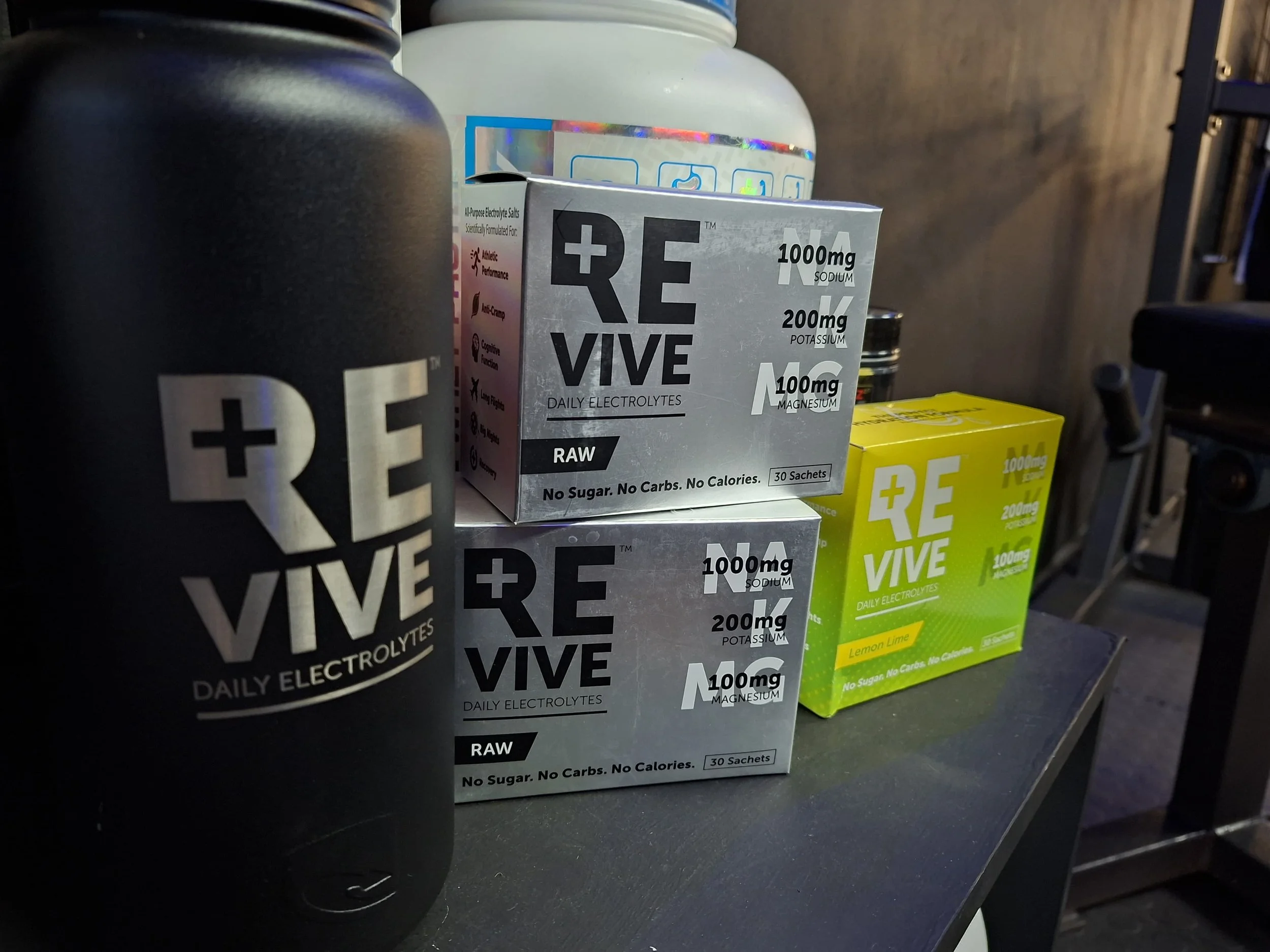
REVIVE Daily Electrolytes available at The Human Performance Center in Noordheuwel, Krugersdorp.
Why They're Essential for Performance, Recovery, and Everyday Health
Most people think staying hydrated is simple. Drink more water. Carry a water bottle. Aim for eight glasses a day.
Yet you've probably experienced days where you've done exactly that and still felt fatigued, struggled through a workout, battled a persistent headache, developed muscle cramps, or simply couldn't perform the way you expected.
If that sounds familiar, the missing piece may not be water at all.
One of the most common misconceptions in health and fitness is that hydration is measured by how much water you drink. In reality, effective hydration depends on how well your body can absorb, distribute, retain, and use the fluid you drink.
That process depends on far more than fluid intake alone. It depends on an intricate balance of minerals called electrolytes—the silent regulators behind muscle contractions, nerve signalling, recovery, fluid balance, and countless other physiological processes that influence how you move, think, recover, and perform.
At The Human Performance Centre, we believe understanding why something matters is just as important as knowing what to do. Rather than recommending products because they're popular or following the latest health trend, we help our clients understand the physiology behind performance so they can make informed decisions based on their individual needs.
Electrolytes are a perfect example.
They're often marketed as something only endurance athletes or elite performers need. In reality, every heartbeat, every breath, every movement, and every thought depends on them. Whether your goal is improving athletic performance, supporting recovery, staying productive at work, or simply feeling healthier day to day, understanding electrolytes is understanding one of the body's most fundamental performance systems.
What Are Electrolytes?
Electrolytes are naturally occurring minerals that carry an electrical charge when dissolved in water. Although they're required in relatively small amounts compared with carbohydrates, proteins, or fats, they are essential for numerous physiological processes that keep the human body functioning normally.
The primary electrolytes include:
Sodium
Potassium
Magnesium
Calcium
Chloride
Phosphate
Each has its own role, but none works in isolation. They operate as an interconnected system, meaning that changes in one electrolyte can influence the balance and function of the others.
Unlike nutrients that primarily support long-term metabolic processes, electrolytes are involved in functions your body performs every second of every day.
Without them, your muscles cannot contract efficiently. Your nerves cannot transmit signals effectively. Your heart cannot maintain its normal rhythm. Your cells cannot properly regulate the movement of water and nutrients across their membranes.
Quite simply, life depends on electrical communication—and electrolytes are what make that communication possible.
Why Your Body Depends on Electrolytes
Every movement begins with an electrical signal.
Before a muscle contracts, before your lungs expand to take a breath, before your heart beats, your nervous system sends tiny electrical impulses throughout your body.
Those signals are only possible because electrolytes continually move across the membranes of your cells. An easy way to think about it is to imagine a city's electrical grid.
Electricity doesn't simply exist because there's a power station. It depends on an entire network of cables, transformers, substations, and control systems working together to deliver power exactly where it's needed.
Your body functions in much the same way.
Electrolytes form part of the communication network that allows every system to work together efficiently. When that network is functioning well, movement feels coordinated, muscles contract and relax effectively, reactions remain sharp, and recovery becomes more efficient.
Sodium and potassium create the electrical gradients that allow nerves to transmit signals. Calcium helps initiate muscle contraction. Magnesium supports muscle relaxation while contributing to hundreds of enzymatic reactions involved in energy production. Chloride helps regulate fluid balance and supports healthy digestion.
When these systems remain balanced, your body performs remarkably well. When they're disrupted, the effects can range from subtle to significant depending on the severity and underlying cause.
Some people may notice reduced exercise tolerance, headaches, dizziness, muscle weakness, or slower recovery between training sessions. Others simply feel that their body isn't responding to training the way it normally would.
Importantly, none of these symptoms automatically indicate an electrolyte imbalance. Sleep quality, overall nutrition, illness, stress, medication, recovery practices, and training load can all influence how you feel and perform.
This is precisely why we take an assessment-first approach at HPC.
Rather than assuming one variable is responsible, we evaluate the entire system. Electrolyte balance is an important piece of the puzzle—but it's rarely the whole picture. Because when it comes to human performance, the body doesn't operate as a collection of isolated parts. It functions as an integrated system, where multiple factors often combine to influence the outcome.
Hydration Isn't Just About Water
One of the biggest misconceptions in health and fitness is that drinking more water automatically means you're well hydrated.
Water is essential. But water alone doesn't determine hydration status.
Your body relies on electrolytes to regulate where water goes, how much is retained, and how effectively it moves between your bloodstream, tissues, and cells. Think of electrolytes as part of your body's traffic management system.
Simply adding more water is like adding more vehicles to a road network without any traffic lights or direction. The water is present, but without proper regulation, it isn't necessarily reaching the places it's needed most.
Sodium plays a major role in maintaining the volume of fluid outside your cells, including your bloodstream, while potassium performs a complementary role inside your cells. Together, they help regulate fluid distribution throughout the body and support normal cellular function.
This is why hydration is about far more than litres consumed. It's about maintaining the balance that allows your body to use those litres effectively.
For someone completing a long training session, working outdoors in the South African heat, or repeatedly losing fluid through heavy sweating, replacing water without replacing electrolytes may not always restore optimal hydration.
On the other hand, consuming electrolyte supplements without any meaningful losses may provide little additional benefit.
Context matters. One of the principles we teach our clients is simple:
The goal isn't to drink more water. The goal is to make the water you drink work for your body.
That shift in thinking changes the conversation from chasing hydration targets to understanding hydration physiology.
The Critical Role of Sodium
Few nutrients have generated as much debate—or as much confusion—as sodium.
For years, public health messaging often focused on reducing sodium intake, leading many people to believe that sodium itself was something to avoid wherever possible.
The reality is far more nuanced. Sodium is an essential mineral.
Without enough of it, your body cannot effectively regulate blood volume, transmit nerve impulses, maintain normal muscle function, or support healthy fluid balance.
It is also the primary electrolyte lost through sweat. However, not everyone loses sodium at the same rate.
Some people lose relatively small amounts during exercise, while others—often referred to as "salty sweaters"—can lose substantially more, particularly during prolonged exercise or training in hot and humid conditions.
This means sodium requirements are highly individual.
A recreational gym-goer completing three short sessions each week will have different requirements from a rugby player training twice a day, an endurance runner preparing for an ultramarathon, or someone spending long hours performing physically demanding work outdoors.
This is one reason why assessment is so important.
At HPC, we don't ask whether sodium is "good" or "bad." We ask whether an individual's training demands, environment, nutrition, and overall physiology are creating a greater need for sodium replacement than their current strategy provides.
That's a far more meaningful question—and one that leads to more personalised recommendations.
While physically active individuals and heavy sweaters often require higher sodium intake than sedentary individuals, people with hypertension, kidney disease, heart failure, or other medical conditions should follow advice from their healthcare professional regarding sodium intake.
Sodium Isn't the Same as Salt
Although the terms are often used interchangeably, sodium and salt are not the same thing.
Table salt, known chemically as sodium chloride, consists of both sodium and chloride. Approximately 40% of table salt is sodium by weight, while the remainder is chloride, along with trace minerals depending on the source.
Understanding this distinction helps explain why nutritional labels typically refer specifically to sodium rather than salt. It also highlights why conversations about sodium intake require context rather than blanket recommendations.
Some individuals naturally consume sufficient sodium through their normal diet. Others—particularly those with high sweat losses, restrictive eating patterns, or increased training demands—may struggle to replace what they're consistently losing.
The objective isn't to consume as much sodium as possible. Nor is it to avoid sodium unnecessarily. The objective is to maintain an appropriate balance that supports your body's needs, your lifestyle, and your performance demands.
Because effective nutrition isn't built on extremes. It's built on understanding what your body requires—and why.
When Do Electrolytes Become More Important?
Every person needs electrolytes.
The difference isn't whether you need them. It's how much you need based on the demands you place on your body.
Someone spending most of their day in a climate-controlled office will naturally have different hydration requirements from a construction worker in the summer heat. Likewise, a recreational gym member training three times a week has different physiological demands from a rugby player preparing for competition or an endurance runner covering long distances.
Your body is constantly adapting to the environment you place it in. As those demands increase, so too can your need to replace the water and electrolytes you lose.
Understanding these situations helps move the conversation away from general recommendations and towards individual physiology—which is exactly where meaningful performance decisions should be made.
Low-Carbohydrate Nutrition and Electrolyte Balance
Low-carbohydrate nutritional approaches, including ketogenic and certain paleo-style eating patterns, have become increasingly popular for improving metabolic health, supporting body composition, and in some cases enhancing endurance performance.
While these approaches can be highly effective for the right individual, they also influence the way your body manages water and electrolytes.
One of the first physiological changes that occurs when carbohydrate intake decreases is a reduction in glycogen—the stored form of carbohydrate found primarily in your muscles and liver.
What many people don't realise is that glycogen stores are closely associated with water. As glycogen levels decrease, your body naturally releases some of that stored water as well. This helps explain why many people notice rapid changes in body weight during the first week of reducing carbohydrate intake. Although this is often interpreted as fat loss, much of the initial change reflects a shift in water balance.
At the same time, lower insulin levels reduce the kidneys' tendency to retain sodium. As sodium excretion increases, water follows. Reduced insulin levels are associated with increased renal sodium excretion, particularly during the early adaptation phase. This combination can leave some individuals more susceptible to electrolyte losses, particularly during the early stages of adapting to a lower-carbohydrate way of eating.
It's not uncommon for people to report headaches, fatigue, light-headedness, reduced exercise performance, or muscle cramps during this transition. These symptoms don't necessarily mean the eating strategy itself is ineffective. In many cases, they simply indicate that hydration and electrolyte balance haven't adapted to match the body's changing physiology.
Understanding why these changes occur allows you to respond intelligently rather than abandoning an approach that may otherwise be appropriate for your goals.
Electrolytes and Intermittent Fasting
Intermittent fasting is another nutritional strategy that has gained significant attention for its potential benefits in areas such as metabolic health, appetite regulation, and body composition.
However, changing when you eat also changes when you consume fluids and electrolytes. During shorter fasting periods, this may have very little impact. As fasting windows become longer—or when fasting is combined with physically demanding work, exercise, or hot environmental conditions—the body's electrolyte balance deserves greater consideration.
Some individuals notice symptoms such as headaches, fatigue, reduced concentration, dizziness, or declining training performance. Electrolyte balance is one possible contributing factor, but it should never be assumed to be the only explanation.
This is an important distinction.
At HPC, we avoid reducing complex physiological responses to a single cause. Factors such as sleep quality, total energy intake, stress, hydration habits, medication, and recovery practices all influence how someone feels during a fasting protocol.
Fasting isn't inherently good or bad. Like every nutritional strategy, its effectiveness depends on the individual, the context, and whether it supports their long-term health and performance goals.
Exercise Changes the Equation
Exercise is where electrolyte balance often becomes most relevant.
As your body produces heat during physical activity, sweating becomes one of its primary cooling mechanisms. Sweating protects you from overheating, but it also removes water and electrolytes from the body. The amount lost is remarkably individual.
Training intensity, exercise duration, environmental temperature, humidity, clothing, genetics, acclimatisation, and individual sweat rate all influence how much fluid and sodium a person loses. Two athletes can complete the same training session under identical conditions and finish with very different hydration requirements.
That's one of the reasons generic hydration advice often falls short.
The body doesn't lose fluids according to a formula. It loses fluids according to the individual. This is especially relevant for endurance athletes, rugby players, footballers, cyclists, runners, tennis players, individuals completing multiple training sessions in a day, and anyone regularly exercising in South Africa's warmer climate.
For these individuals, hydration is not simply about replacing the water they've lost. It's about replacing what their physiology has lost.
That's an important difference.
Hydration Doesn't Produce Energy—It Supports It
One of the most common misconceptions surrounding electrolyte products is that they provide energy.
They don't.
Electrolytes contain no meaningful calories and don't directly fuel muscular work. The body's energy comes primarily from carbohydrates and fats, with protein contributing under certain circumstances.
Electrolytes perform a different—but equally essential—role. They create the internal environment that allows those energy systems to function efficiently.
Imagine building a high-performance engine. Fuel is essential. But without an electrical system to ignite that fuel, the engine won't run as intended. Your body works in much the same way. Nutrition provides the fuel. Electrolytes help support the systems that allow that fuel to be used effectively.
This is why someone can consume enough calories and still feel physically limited if hydration and electrolyte balance are compromised. Likewise, consuming electrolyte products cannot compensate for inadequate sleep, poor nutrition, excessive training load, or insufficient recovery.
Human performance is rarely determined by a single variable. It's the interaction of multiple systems working together.
Are Sports Drinks Always the Answer?
Many people automatically reach for a sports drink after exercise because they've been taught that's what active people should do.
The reality is more nuanced. Traditional sports drinks were originally developed to provide both fluid and rapidly available carbohydrate during prolonged endurance exercise.
In the right setting, they can be an effective tool. But tools should always match the job.
Someone competing in a marathon has different nutritional demands from someone completing a forty-five-minute strength session before work. Many commercially available sports drinks are formulated for broad consumer appeal rather than individual physiological requirements. Some contain relatively modest amounts of electrolytes while providing substantial quantities of added sugar.
That doesn't make them good or bad. It simply means they should be used intentionally rather than automatically.
One of the most valuable habits any athlete or health-conscious individual can develop is learning to ask:
"What problem am I actually trying to solve?"
If the answer is replacing substantial sweat losses after prolonged exercise, your strategy may look very different from someone simply trying to stay hydrated throughout a normal workday.
Matching the Strategy to the Individual
By now, one thing should be becoming clear. Electrolytes aren't reserved for elite athletes. Nor are they something every person should supplement indiscriminately.
Their importance increases as the demands on your body increase.
Training volume.
Environmental conditions.
Nutritional strategy.
Occupation.
Health status.
Recovery demands.
These variables all influence how much support your body may require. This is why meaningful performance coaching isn't about applying generic recommendations. It's about understanding the individual standing in front of you.
And that's exactly where the conversation naturally leads next. Because once you understand when electrolytes matter, the next question becomes:
How do you know whether supplementation is actually necessary?
How Do You Know If Electrolytes Deserve Your Attention?
By now, one thing should be clear. Electrolytes are essential.
The more important question is whether your current lifestyle, nutrition, training demands, and environment are creating a need for greater attention to electrolyte balance.
This is where many people begin searching for simple answers.
"I've been getting muscle cramps."
"I feel tired during training."
"I've been getting headaches."
"I'm drinking plenty of water, but I still don't feel hydrated."
While electrolyte balance may contribute to these experiences, it's important not to jump to conclusions.
Many of these same symptoms can also result from inadequate sleep, insufficient calorie intake, illness, excessive training loads, poor recovery, certain medications, underlying medical conditions, or simply accumulated fatigue.
This is why we believe understanding the whole picture is far more valuable than trying to treat isolated symptoms. The body is remarkably good at telling us that something needs attention.
The challenge is correctly identifying what that something is.
Why We Don't Recommend Supplements First
The health and fitness industry has become exceptionally good at convincing people that every problem has a product.
Feeling tired? Take a supplement.
Recovering slowly? Buy another supplement.
Struggling with performance? Try the newest supplement.
Unfortunately, physiology doesn't work that way.
At The Human Performance Centre, supplements are never our starting point.
Our first questions are always:
Are you sleeping well?
Are you eating enough to support your training?
Are you drinking enough fluid?
Does your nutrition match your workload?
Is your recovery sufficient?
Is your movement efficient?
Does your training programme suit your current capacity?
Only after understanding these foundations do we begin asking whether targeted supplementation may provide additional support. That's because supplements should supplement a well-built foundation—not compensate for one that doesn't exist.
This philosophy shapes every recommendation we make. Whether we're working with an executive trying to maintain energy throughout demanding workdays, a parent wanting to support their child's athletic development, or an athlete preparing for competition, our goal is never to recommend more.
Our goal is to recommend what is appropriate.
When Does an Electrolyte Supplement Make Sense?
Many people obtain all the electrolytes they need through a varied diet, appropriate hydration, and healthy recovery habits. Others place greater demands on their bodies and may benefit from additional support.
This often includes people who:
Train intensely or frequently.
Exercise or work in hot environments.
Sweat heavily during physical activity.
Participate in endurance events.
Follow lower-carbohydrate nutritional strategies.
Practise intermittent fasting.
Complete multiple demanding training sessions each week.
The important point isn't whether someone belongs to one of these groups. It's whether their current nutritional strategy is successfully meeting the demands being placed upon them.
That's a question best answered through assessment rather than assumption.
Choosing an Electrolyte Supplement
If electrolyte supplementation is appropriate, the next consideration becomes quality.
Not every electrolyte product is formulated with the same purpose.
Some focus primarily on sodium. Others contain only modest quantities of the minerals that actually support hydration and neuromuscular function. Some include significant amounts of added sugar, while others are designed specifically to support hydration without unnecessary ingredients.
The right choice depends on your goals.
For someone participating in prolonged endurance events, carbohydrate-containing sports drinks may be entirely appropriate. For someone whose primary goal is improving hydration without additional calories, a different formulation may be better suited.
Once again, context matters.
At HPC, when we recommend an electrolyte supplement, we look for products that provide meaningful amounts of key electrolytes in appropriate ratios while aligning with the individual's broader nutritional strategy.
One of the products we trust is REVIVE Daily Electrolytes because it aligns with that philosophy. Rather than simply adding flavour to water, it has been formulated to support hydration with a balanced profile of essential electrolytes, including sodium, potassium, and magnesium.
Importantly, the recommendation doesn't begin with REVIVE.
It begins with understanding whether supplementation is appropriate in the first place.
The Bigger Picture
It's easy to become distracted by individual nutrients.
One week it's electrolytes. The next it's protein. Then magnesium. Then vitamins.
But human performance has never been built on one nutrient.
It's built on systems working together.
Hydration.
Nutrition.
Recovery.
Movement.
Sleep.
Training.
Stress.
None exists in isolation.
When one area begins to drift, the others often follow. This is why the most effective performance strategies don't chase quick fixes.
They build strong foundations.
Performance is rarely limited by one missing nutrient. More often, it's limited by several small systems that are no longer working together.
Understanding that principle changes the way you approach your health—not just today, but for years to come.
Key Takeaways
If there are important notes we'd like you to leave with, it's this:
Hydration is about more than drinking water. Your body depends on electrolytes to absorb, distribute, and use the water you consume effectively.
Electrolytes are essential for everyday health—not just athletic performance. They support nerve signalling, muscle function, fluid balance, and countless processes that keep your body working efficiently.
Your electrolyte requirements are unique to you. Training load, environment, nutrition, lifestyle, and individual physiology all influence how much support your body may need.
Symptoms such as fatigue, headaches, muscle cramps, or poor recovery rarely have a single cause. Effective solutions begin with understanding the whole picture rather than treating isolated symptoms.
Supplements should support strong foundations, not replace them. Sleep, nutrition, hydration, movement, and recovery remain the cornerstones of long-term health and performance.
The best decisions are informed decisions. Assessment provides clarity, helping you understand what your body needs before deciding how to support it.
Frequently Asked Questions About Hydration and electrolytes
-
Yes, in certain circumstances. Drinking large amounts of water over a short period—particularly during prolonged exercise or after significant sweat losses—can dilute the concentration of sodium in the bloodstream. While this is uncommon, it highlights why hydration is about maintaining an appropriate balance of both fluids and electrolytes rather than focusing on water alone. The right hydration strategy depends on your activity level, environment, and individual physiology.
-
No. Although electrolyte imbalances can contribute to muscle cramps, they are only one possible factor. Exercise-associated muscle cramps are considered multifactorial and may also be influenced by muscular fatigue, training intensity, conditioning, movement mechanics, hydration status, and recovery. Persistent or recurring cramps should be assessed rather than assumed to have a single cause.
-
Not necessarily. Many people obtain sufficient electrolytes through a balanced diet and normal hydration habits. Daily supplementation may be appropriate for individuals with high training volumes, physically demanding occupations, heavy sweat losses, or specific nutritional strategies, but it shouldn't be considered a universal requirement. Your needs should always reflect the demands placed on your body.
-
One clue is visible salt residue on your clothing, skin, or training equipment after exercise. Some people also notice stinging sweat in their eyes or develop white salt marks on hats and shirts. While these observations can suggest higher sodium losses, they don't quantify exactly how much you're losing. Sweat rate and sweat composition vary considerably between individuals, which is why personalised hydration strategies are often more effective than generic recommendations.
-
No. Exercise simply increases the body's demand for fluid and electrolyte replacement. Electrolytes are involved in normal nerve function, muscle contraction, fluid regulation, and many other physiological processes every day, whether you're training or not. Physical activity changes how much you may need—not whether you need them.
-
In many cases, yes. A varied diet containing whole foods typically provides the electrolytes required for normal health. However, people who sweat heavily, train frequently, work in hot environments, or follow specific dietary approaches may lose electrolytes faster than they replace them through food alone. Whether additional support is beneficial depends on the individual rather than a general rule.
-
For most healthy adults, moderate consumption of coffee and tea contributes to daily fluid intake rather than causing dehydration. While caffeine has a mild diuretic effect in people who are not accustomed to it, regular consumers generally develop a tolerance to this effect. Total daily fluid intake, activity level, and electrolyte balance remain far more important than avoiding caffeinated beverages altogether.
-
Urine colour can provide a useful indication of hydration, but it shouldn't be relied upon in isolation. Factors such as vitamin supplements, certain foods, medications, and the timing of fluid intake can all influence urine colour. Looking at broader patterns—including thirst, body weight changes after exercise, training performance, and overall well-being—provides a more complete picture of hydration status.
-
Neither is inherently better—they serve different purposes. Traditional sports drinks often combine carbohydrates with electrolytes to support prolonged endurance exercise, while many electrolyte supplements focus primarily on replacing minerals without additional calories. The most appropriate option depends on your training duration, exercise intensity, nutritional goals, and overall hydration strategy.
-
Because no supplement can replace understanding the problem you're trying to solve. Fatigue, poor recovery, headaches, declining performance, or muscle cramps may have many contributing factors beyond electrolyte balance. At The Human Performance Centre, we assess the interaction between hydration, nutrition, movement, sleep, recovery, and training demands before making recommendations. That allows us to provide advice based on your individual physiology rather than assumptions.