Warm-Up and Cool-Down: How to Prepare and Recover for Better Performance
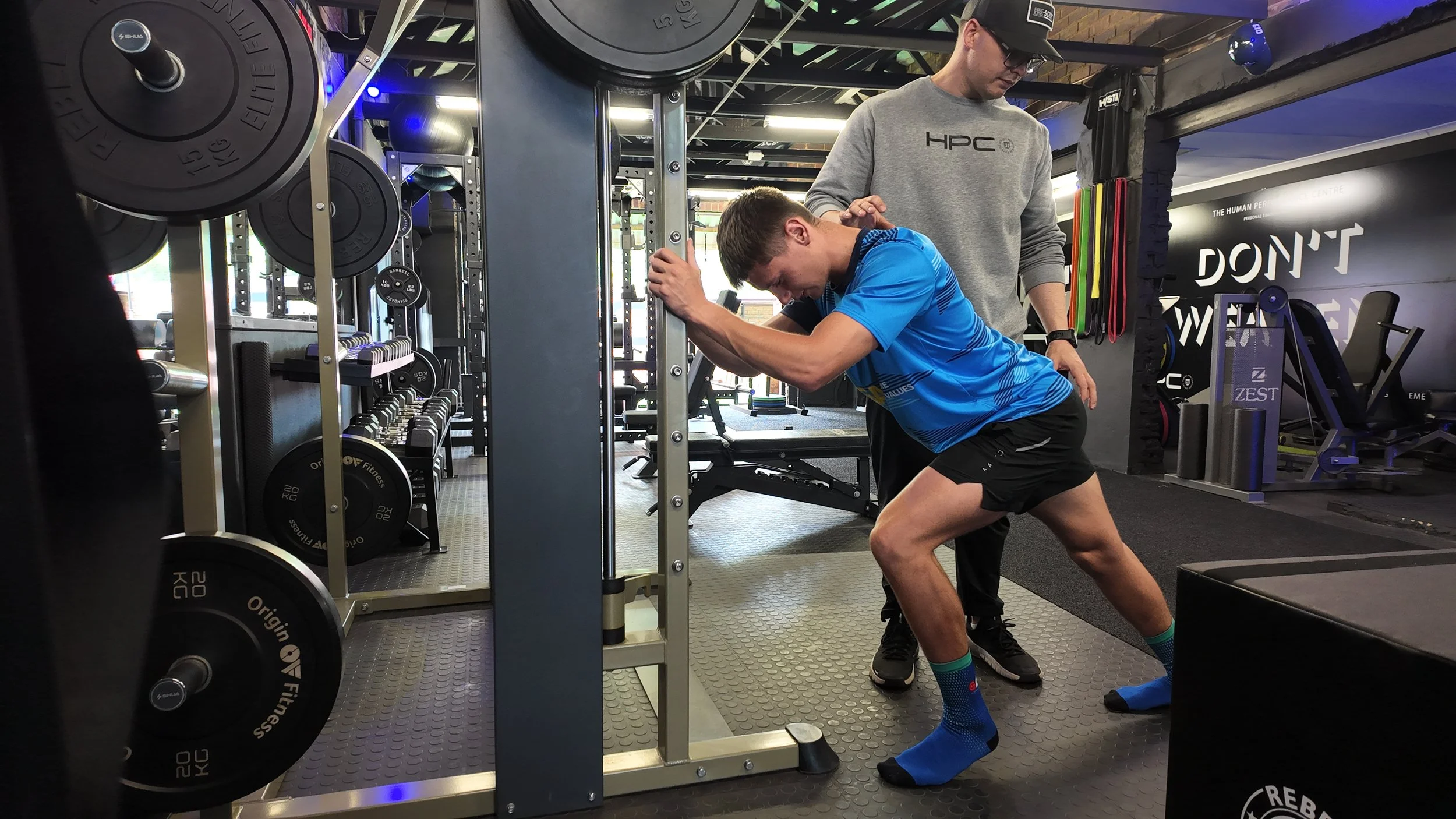
Anton Esterhuizen training a school athlete for rugby and athletics at the HPC gym in Noordheuwel, Krugersdorp.
The Crucial Role of Warm-Up and Cool-Down in Human Performance
What exactly are you preparing your body for?
It is a simple question, but it can completely change how you approach a training session.
For many people, a warm-up is simply something they do because they have been told they should. Five minutes on the treadmill, a few stretches, perhaps some band work, and then the workout begins.
But if the purpose of a warm-up is to prepare the body, the more important question is: prepare it for what?
The answer should influence everything that follows.
Your goals, your current physical state, the demands of the session, your limitations, the environment and, for athletes, the demands of your sport all influence what your body needs before training begins.
The same principle applies when training ends. A cool-down should not simply be a few stretches added because the workout is over. It should help the body transition from the demands of training towards recovery.
At HPC, preparation and recovery are not separate from the training process. They are part of it.
A Warm-Up Is Preparation, Not a Ritual
The purpose of a warm-up is to move the body from where it is now towards the state it needs to be in to perform the work ahead.
That means the same warm-up does not necessarily make sense for everyone.
Someone who has spent most of the day sitting may require more extensive preparation before training than someone who has been physically active throughout the day. Training in cold weather can also change how much preparation is appropriate. An athlete preparing for sprinting, jumping, or heavy lifting has very different demands than someone completing a moderate resistance-training session.
The seriousness of the goal matters too.
If someone simply wants to move better and maintain general fitness, their preparation may be relatively straightforward. If someone is preparing to compete at a high level, the demands on their body are considerably greater, and the preparation needs to reflect that.
For many of our clients, we may spend five to ten minutes gradually elevating the heart rate and increasing general activity. But that is not a rule that determines readiness.
The purpose determines the method.
The clock is simply a tool. Your body and the demands of the session determine what needs to happen.
What Should Your Warm-Up Actually Prepare?
A good warm-up does more than make you feel warm.
It begins by preparing the systems and movement demands that will be required during the session.
Your cardiovascular system needs to transition towards greater physical demand. Your joints and tissues may need to move through ranges that will be required later. Your nervous system needs to become more prepared for the coordination, speed, force, or precision that the session demands.
And your mind needs to arrive at the session too.
These elements don't necessarily require separate exercises or a long list of warm-up drills. A well-designed session can address several of them at once.
The important part is knowing what you are trying to prepare.
Cardiovascular preparation
Gradually increasing activity elevates heart rate and blood flow and begins preparing the body for increased physical demand.
The intensity can then be progressed according to what follows. The cardiovascular preparation for a high-intensity conditioning session does not need to look the same as preparation for heavy strength work.
Movement and mechanical preparation
The body may need access to specific positions, ranges of motion, and movement patterns before those demands are loaded.
This is where mobility and movement preparation become useful. But they should be selected because they have a purpose within the session, not because they happen to be part of a popular warm-up routine.
If the workout is going to place a particular demand on a joint, movement pattern or tissue, preparation should progressively introduce that demand.
Neurological preparation
Your nervous system is involved in coordinating movement, controlling force, and producing the physical output required by the task.
That means the beginning of a session can be used strategically to introduce exercises that require coordination, speed, precision, or technical control while fatigue is still low.
Mental preparation
There is also a transition taking place that has nothing to do with a muscle or joint.
You may arrive at training after work, after a long day at your desk, or after dealing with everything else life has placed in front of you. The warm-up gives you an opportunity to shift your attention towards the session and become mentally engaged with the task ahead.
For an athlete, that focus can be particularly important when the session requires technical execution or high levels of physical output.
Your Warm-Up Should Make Sense Mechanically
This is where biomechanics becomes important.
We don't simply ask, "What warm-up exercises should I do?"
We ask:
What does this body need to be able to do, and what does this session require from it?
Consider a simple example.
If the workout is going to revolve around chest pressing, you would not necessarily spend a large portion of your preparation opening up your hip flexors simply because that exercise appears in a generic warm-up routine.
It has to make sense.
That doesn't mean the hips are unimportant. It means there needs to be a reason for addressing them in that particular session.
The same principle applies to an athlete preparing for sport. A rugby player preparing for sprinting and change of direction has different mechanical demands from a runner preparing for a steady endurance session. Someone preparing for a heavy squat has different demands again.
The warm-up should progressively expose the body to the positions, movements, and forces it is going to encounter.
And there is another benefit to doing this properly: the warm-up can tell you something about the body.
As a coach, you are not simply watching whether someone completes the exercise. You can observe how they move, where they compensate, how they respond as the demand increases, and whether something that looked fine at low intensity changes when the movement becomes more demanding.
That information can influence what happens next.
This is one of the reasons an individualised warm-up is so valuable. Preparation is not just about getting the body ready. It can also give the coach information that helps determine how the session should progress.
Prepare the Nervous System Without Wasting Energy
Preparation should not leave you exhausted before the training has properly started.
It is possible to turn a warm-up into another workout, particularly when people believe that more exercises automatically mean better preparation.
But the goal is not to accumulate fatigue.
Time is also a factor for most people.
That is why we can use the early stages of a workout strategically. Lower-load, neural, or lower-physical-demand exercises can be positioned at the beginning of a session with appropriate repetitions and sets to provide the stimulus required without unnecessarily draining the client.
This can prepare coordination, movement quality, and neurological output while preserving energy for the work that follows.
For an athlete, that becomes particularly important when speed, power or technical precision are involved. You don't want to exhaust the qualities you are trying to train before you have actually trained them.
This is where training economy matters.
The objective isn't to do more. It is to make the time and energy you have more effective.
How Much Warm-Up Do You Actually Need?
There is no universal answer.
A warm-up needs to be long enough and specific enough to prepare the individual for the demands ahead.
Sometimes that preparation is relatively simple.
Sometimes it needs to be considerably more extensive.
A sedentary individual may need more time to transition into movement. Cold environmental conditions may require more gradual preparation. A high-level athlete preparing for explosive or technically demanding performance may require several progressive stages before reaching full intensity.
The individual's current condition matters too.
A warm-up should respond to the person who is standing in front of you, not the theoretical person for whom the routine was originally designed.
Five minutes is not a magic number.
Ten minutes isn't either.
Readiness is the goal, not completing a predetermined amount of time.
Mobility and Stretching: What Does Your Body Actually Need?
Mobility work can be an important part of preparation, but it should not automatically be included simply because it has been labelled a "warm-up exercise."
The type, duration, and timing of mobility work should depend on the individual and the demands of the session.
Dynamic movements may be appropriate when you need to progressively explore a movement pattern or range of motion. Static stretching may have a place in certain circumstances. Activation exercises can also be useful when a particular area needs to be prepared for the work ahead.
The important question is always why.
If a restriction is going to affect the way someone performs the movement they are about to train, addressing it may be highly relevant.
If it isn't relevant to the session, spending significant time addressing it may simply add more work without improving the quality of the training.
The body does not need every possible preparation exercise.
It needs the preparation that is relevant to what it is about to do.
What a Warm-Up Should Not Be
A warm-up should prepare you for training. It should not become a second workout that leaves you too fatigued to train effectively.
It shouldn't be a generic sequence performed identically before every session, regardless of what follows.
It shouldn't be a collection of random exercises.
It shouldn't be dictated entirely by a timer.
And it shouldn't be selected without considering the individual performing it.
Most importantly, it shouldn't exist simply because someone told you that everyone needs the same warm-up.
The more serious the goal, the more important it becomes that preparation has a reason behind it.
For someone training for general health, that may mean a relatively simple transition into activity.
For an athlete preparing to perform at a high level, preparation may need to be far more specific and progressive.
The warm-up should match the demands of the goal.
When the Workout Ends, the Body Still Has Work to Do
The body does not instantly move from high physical demand back to its resting state because you have finished your final repetition.
A cool-down provides a controlled transition.
Gradually reducing exercise intensity allows the cardiovascular system to adjust rather than moving abruptly from vigorous activity to complete rest. Light movement can maintain circulation while the body begins transitioning away from the demands of the session.
But just as there is no universal warm-up, there is no universal cool-down.
The right question is not simply, "What stretches should I do after training?"
It is:
What does this body need now that the work is done?
Breathing, Movement and the Transition Into Recovery
After intense exercise, breathing remains elevated as the body responds to the demands that have been placed on it.
The end of the session provides an opportunity to regain control of that breathing and deliberately begin transitioning towards a more relaxed state.
This may be as simple as controlled breathing, light movement, or a combination of strategies selected according to the individual.
Breathing can also provide an opportunity to bring attention back to the body after a demanding session. A coach may use different breathing strategies depending on what the client needs, rather than automatically prescribing the same technique to everyone.
The cool-down can therefore serve both a physical and mental purpose.
Training requires focus, output, and effort. The end of the session gives you an opportunity to begin shifting away from that heightened state and back towards the rest of your day.
Does Everyone Need the Same Cool-Down?
Again, no.
A person finishing a moderate-strength session may need a very different transition from an athlete who has completed a high-intensity conditioning session.
The training demands, the individual's condition and limitations, the environment, and what they need to do after training can all influence what an appropriate cool-down looks like.
At HPC, that might involve light movement, breathing strategies, mobility work, or other appropriate methods.
Even something as simple as a dead hang from a pull-up bar can have a place within the right context.
The exercise itself isn't the point.
Why it has been selected is.
Preparation Is Part of Performance
It is easy to think of the warm-up and cool-down as the parts of training that happen before and after the workout.
They are not separate from the process.
The warm-up prepares the body for the demands it is about to experience. The training provides the stimulus. The cool-down helps the body transition away from that stimulus and towards recovery.
Each stage has a purpose.
And when you understand the person, the goal, and the demands of the session, those stages can be selected with far greater precision.
That is ultimately what good programming should do.
It shouldn't give you more exercises simply because more exercises look impressive on paper. It should give you the preparation, stimulus, and recovery strategy that make sense for the person and the outcome you are trying to achieve.
At the Human Performance Centre, this is part of how we approach human performance: understand the individual, assess what the body needs, and apply the appropriate strategy rather than relying on generic routines.
Because the quality of your training doesn't begin with your first working set.
It begins with how intelligently you prepare for it.
So, before your next session, ask yourself: what exactly are you preparing your body for?
If you want your training to be built around your body, your goals, and the demands you are asking it to meet, speak to the HPC team about starting with the right assessment and building your path to progression from there.